23.04.2026
Real estate investment versus other assets in 2026: where the real balance is today
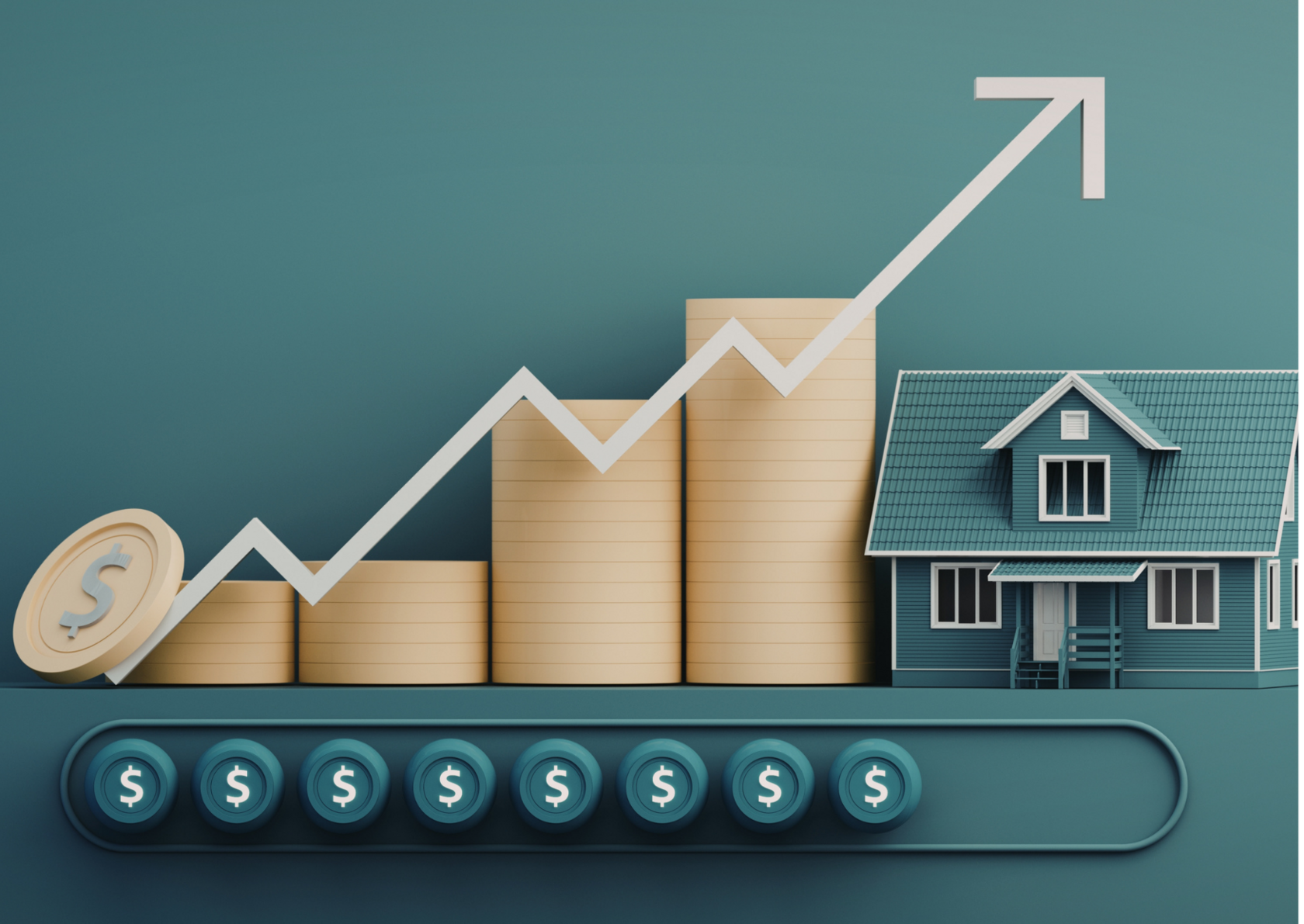
The investment conversation is often oversimplified. It is often presented as a direct comparison between profitability and profitability: stock market versus housing, deposits versus rent, liquidity versus brick. But in 2026, the real debate is not only about how much each asset can yield, but also about what function it plays within a wealth strategy.
Real estate continues to occupy a relevant place because it combines three elements that are difficult to find together: capacity to preserve value, flow generation and exposure to real demand. And that has special weight in an environment where inflation is no longer a theoretical hypothesis and where financial markets continue to be subject to episodes of volatility.
Data from the Spanish market helps to understand it. In 2025, there were more than 714,000 sales and purchases, the average registration price reached €2,354/m² with a year-on-year growth of close to 9.5% and rent closed the year with an increase of 8.5%, to an average of €14.7/m². These figures describe an asset that is still very present in property decision-making. It is not a paralyzed or marginal market: it is a live, tense and strategically relevant market.
Now, that does not mean that real estate is automatically the best option in all cases. What it does mean is that your role has changed. It is no longer seen only as a way to obtain quick capital gains, but as a balance piece within more diversified portfolios.
Compared to equities, housing offers less liquidity and less immediacy, but also lower perceived volatility for conservative asset profiles. Compared to more traditional savings products, it can offer an interesting combination between revaluation and periodic income. And compared to purely financial assets, it adds a tangible dimension that many investors continue to value, especially in phases of uncertainty.
Therefore, in 2026, the real estate investor tends to be more selective. Look for consolidated locations, markets with structural demand, reasonable outflow liquidity and contained exposure to regulatory risks. It is no longer enough to buy “something” because it is a home. The important thing is which home, where, for what strategy and with what time horizon.
The monetary context also influences. After the rate hike cycle that began in 2022, the environment for 2026 moves towards a more predictable normalization. That doesn't return the market to the years of ultra-cheap credit, but it does reduce some of the noise. In this framework, the investor compares better: he no longer only asks how much he can earn, but also what risk he assumes and what stability he seeks.
Real estate investment, therefore, does not compete solely for nominal profitability. It competes for relative stability, for protection against inflation, for demand absorption capacity and for utility within a broader portfolio.
The conclusion is not that real estate has replaced other assets. It is another: it remains a strong piece when its function is well understood. In 2026, investing is no longer about chasing the highest return at any price. It consists of building balance.
Own analysis based on public sources.
Sources
INE – Property Rights Transfer Statistics 2025
https://www.ine.es/dyngs/Prensa/ETDP1225.htm
Bank of Spain – Fall 2025 Financial Stability Report
Idealista – Analysis 2025 and forecasts for housing in 2026
College of Registrars – Real Estate Registry Statistics 2025
https://www.registradores.org/actualidad/portal-estadistico-registral/estadisticas-de-propiedad